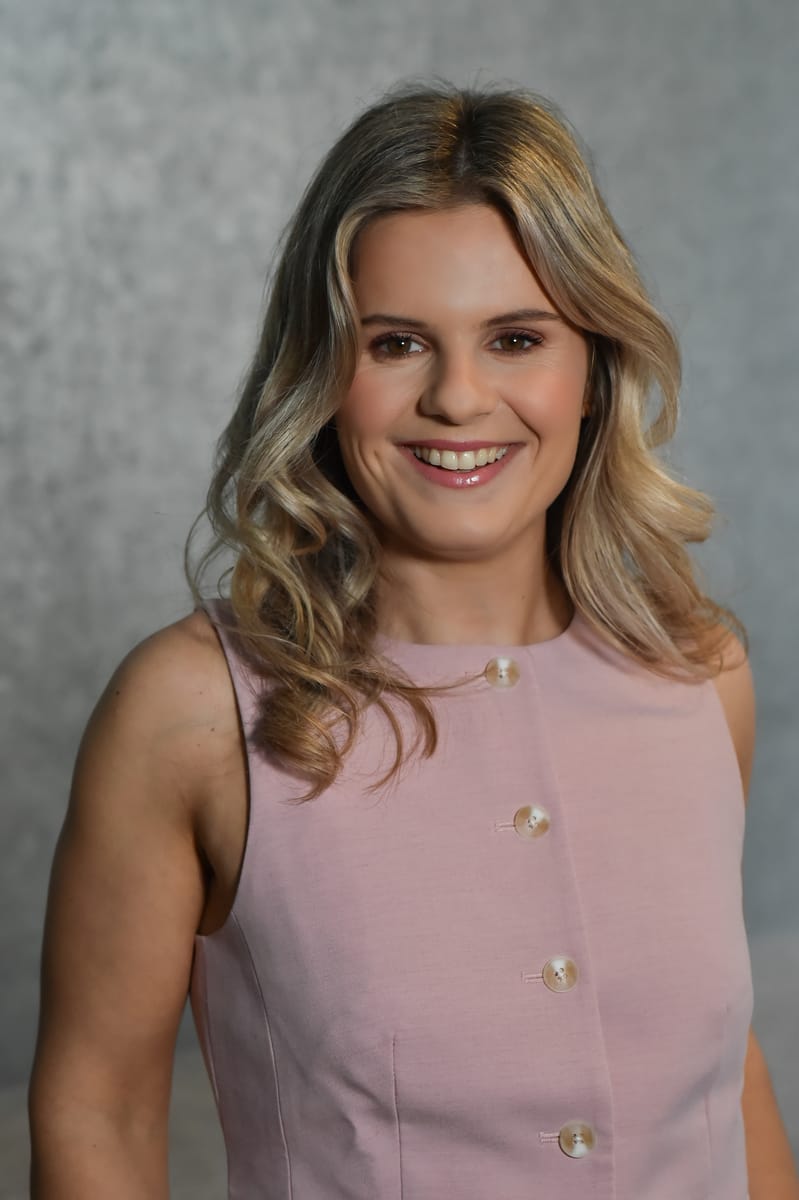
I want to share something personal, because this conversation isn’t theoretical for me, it’s lived.
We are still talking about a maternal health crisis in the UK in 2026, and honestly, that breaks my heart. Many of you will have seen Louise Thompson speaking openly about her birth trauma, and the powerful work she’s doing alongside Theo Clarke. If you haven’t signed their petition yet, please do. It’s passed 100,000 signatures now, which means it must be debated in Parliament.
Next week, they’re holding a rally outside the House of Commons. One of my team and I will be there. I want to speak with Louise, not just to share the work we’re doing with Matresa, but to carry your stories too. So many of you have trusted me with them, and I don’t take that lightly. Thank you.
Because this is what I mean when I talk about making the invisible visible.
The motherhood penalty.
The mental load.
Whatever name you give it — it’s real.
And it shows up most clearly in the moments where we feel we have something to prove.
I remember having my first child, Arthur — he’ll be nine next week, which feels impossible. I was 25 when I had him. I’d had an emergency caesarean under general anaesthetic, so I was asleep when he was born. It was frightening, disorienting, and I hadn’t even processed what my body had been through.
Yet a week postpartum, I was determined to go into town.
New pram. Boots. Shopping.
I remember standing there, buying maternity pads, leaning against a shelf, and saying to my husband, “I need to go home.” My body knew before my mind did.
Why was I so desperate to be out?
Why did I feel I had to do something, to show I was okay when I had just had a baby?
Because I had a point to prove.
“I’m fine.”
“I’ve got this.”
“I can bounce back.”
No one told me to slow down.
No system checked whether that moment was too much. No one asked me if I was ok after giving birth under a general.
And I didn’t know how to listen to myself yet.
Fast forward to my third baby, Archibald, who’s two now.
A week postpartum, I was on the sofa in my pjs. Resting. Recovering. Letting myself be unseen — but safe. That didn’t come from better resilience. It came from experience, permission, and hindsight.
And here’s the thing I keep coming back to:
When those early moments are rushed, shortened, or deprioritised, small things quietly build. Not because anyone is careless but because our systems are designed around thresholds, not continuity.
They notice crisis.
They miss patterns.
This isn’t about alarm.
It’s about risk management.
And about giving mothers the chance to be seen before things escalate.
If motherhood feels heavier than you expected, even when you’re “coping” there is nothing wrong with you.
You’re not weak.
You’re not failing.
You’re carrying more than anyone is measuring.
In between appointments, life continues. Sleep changes from one night to the next. Feeding evolves. Emotions shift. Questions arise quietly, often at moments when support isn’t easily accessible.
Many mothers tell me that this is where uncertainty creeps in. Not because something feels dramatically wrong, but because something feels different and there’s no clear place to sense-check whether that change matters.
Being unsure doesn’t mean you’re overthinking.
It means you’re navigating a system that isn’t designed for continuity.
If this landed for you, there may be another mother who needs to read it today.
You can forward this email or share the link, not for Matresa, but for her.
Practical support for your 6-week check
One of the moments where mothers often tell me they feel most unseen is the 6-week postnatal check.
It’s often the first and sometimes only formal review after birth. And yet, it can be rushed, variable, and focused on whether you’re coping, rather than how you’re actually doing.
That’s why we created a 6-Week Postnatal Check Guide.
Not to turn you into your own clinician.
Not to add more pressure.
But to help you feel a little more supported going into that appointment, whether that’s next week or already behind you.
The guide gently prompts:
Physical recovery beyond “it’s healing”
Mental and emotional load (not just mood scores)
Sleep, feeding, pain, and energy patterns
The things mothers often don’t raise, because no one asks
You can use as much or as little of it as feels right.
There’s no expectation to “cover everything”.
It’s there to help make you more visible in a moment that often isn’t designed for depth.
Click the link below to download your free copy via the Matresa waitlist.
With care,
Mari-Carmen
Founder, Matresa